Best Sellers
 Olivia Cabinet Bed
 Massage Chairs
 Saunas
 Living Room
 Bedroom
 Dining Room
 More


Quick answer
Yes. A basement is one of the easiest places in a Canadian home for a sauna, if you pick the right kind. An infrared cabin like the Haven Heat runs on dry heat, stands 75 inches tall and goes together with no tools. A traditional sauna with rocks and steam needs a sealed, vented room and a 240V line. Compare all our home saunas.
Last updated November 2026 by the Forward Furniture team
Shop saunas
-
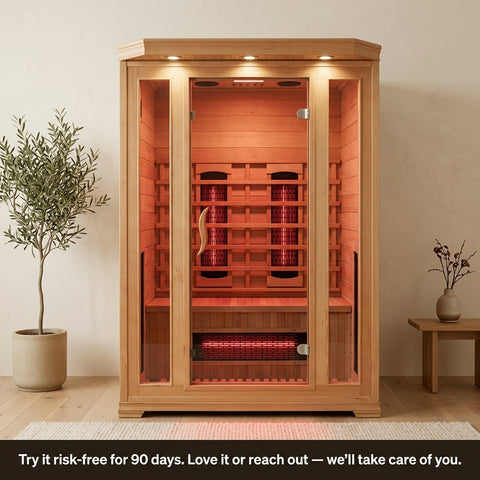
Haven Heat Infrared Sauna
$1,899 – $3,69990-day home trialFree pickup in KelownaCalgaryEdmonton · from $158/mo
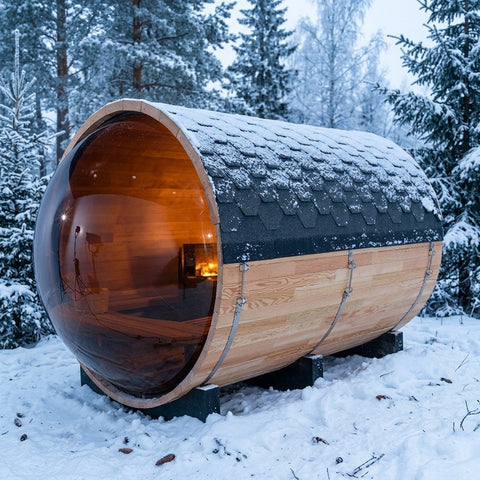
Aurora Panorama Barrel Sauna — 6 to 8 Person Outdoor Sauna
$9,999$7,499.9990-day home trialFree pickup in KelownaCalgaryEdmonton · $624/mo
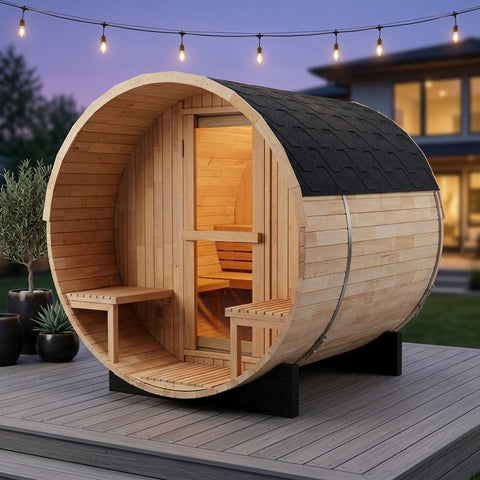
Nordic Porch Barrel Sauna — 4 to 6 Person Outdoor Sauna
$6,133$4,999.9990-day home trialFree pickup in KelownaCalgaryEdmonton · $416/mo
A basement has a lot going for a sauna. The floor is concrete, the room stays cool and steady all year, and it is private. Many basements also have a bathroom close by for a shower after.
But not every sauna suits a basement, and not every basement is ready for one. This guide covers the checks that matter: type, space, ceiling, moisture and power. Every size comes from the maker's spec on our product pages, and every price is from our live catalogue.
In this guide
- Can you put a sauna in a basement?
- Infrared or traditional for a basement?
- How much space does a basement sauna need?
- Does a basement sauna need a vapor barrier?
- What power does a basement sauna need?
- Is it cheaper to buy or build one?
- Which basement sauna is right for you?
- Questions

Can You Put a Sauna in a Basement?
Yes. Saunas go in basements all the time. Here is why a basement often works better than an upstairs room:
- Concrete floor. It is level, strong and does not mind warmth.
- Steady temperature. A basement does not swing hot and cold with the seasons.
- Space you are not using. A corner by the laundry or a home gym is often enough.
- Quiet and private. No one walks past while you sit.
The catch is moisture. Basements can be damp, and a sauna that makes steam adds more. That is why the type of sauna you pick matters most. Building a suite downstairs too? Our guide to a Calgary basement suite shows what to measure for a bed.
Infrared or Traditional Sauna for a Basement?
An infrared sauna warms your body with heater panels. The air stays drier and cooler. A traditional sauna heats the air with a stove and rocks, and you pour water on the rocks for steam.
What to check Infrared cabin (Haven Heat) Traditional sauna with rocks Heat 150°F max, per the maker's spec 149 to 176°F room, per the manual for a 6 kW Harvia sauna heater Steam None, it is dry heat Yes, from water on the rocks Warm up About 15 minutes About an hour in an insulated room, per the same manual Build Pieces that go together with no tools A framed, insulated and sealed room Power Household outlet or circuit listed on the product page 6 kW stove draws 25.0 amps at 240 volts Haven Heat facts are the maker's specs on our product page. Traditional sauna facts are from the heater manual linked above.
For most basements, infrared is the simpler choice. It adds no steam, needs no new walls and in most homes skips the 240V line. Our barrel saunas, the Nordic Porch and the Aurora Panorama, are built as outdoor saunas, so they are not a basement option. For the full side by side, read infrared sauna vs traditional sauna.

How Much Space Does a Basement Sauna Need?
Every Haven Heat size is 75 inches tall. The floor it takes depends on how many people sit in it:
Size Width x depth Floor taken Price today Haven Heat 1 Person 35 x 35 in 8.5 sq ft $1,899.99 Haven Heat 2 Person 47 x 41 in 13.4 sq ft $2,699.99 Haven Heat 3 Person 60 x 47 in 19.6 sq ft $3,699.99 Sizes are the maker's specs on our product page. Floor taken = width times depth. Prices are live from our catalogue on the day this page was built.
Here is a worked example. Say your spare basement room is 10 by 12 feet, or 120 sq ft. The 2 Person cabin takes 13.4 sq ft, about 11 percent of that floor. The rest of the room still works as a gym or a storage corner.
Before you buy, measure these:
- Ceiling height at the lowest point, under ducts, pipes and beams. You need more than 75 inches.
- The floor spot. It should be level, dry and not over a floor drain.
- The door swing of the sauna and of the room it sits in.
- The path down. Stairs, landings and turns. The cabin comes in pieces, so check the biggest panel fits.

Not sure which size? Our guide on how to choose a home sauna walks through power, space and heat for every room.
Does a Basement Sauna Need a Vapor Barrier?
It depends on the type. A traditional sauna you build into a room makes steam. That steam must not get into the walls, so builders line the room with insulation and a vapor barrier, and add vents. The heater manual we cite asks for the air to change about six times an hour.
An infrared cabin is different. It is a free standing box with its own walls, and no water goes on the heaters. You do not build a room around it. Still, a basement can be damp on its own, so:
- Check for damp first. Water stains, a musty smell or wet spots after rain should be fixed before any sauna goes in.
- Run a dehumidifier in the room if the air feels heavy in summer.
- Leave a gap between the cabin and the walls so air can move.
- Wipe the bench after each session and leave the door open to dry.

What Power Does a Basement Sauna Need?
A typical household circuit is 15 amps at about 120 volts. That tops out near 1,800 watts. Here is what that means:
- Infrared cabins: small ones are made to run on household power. The Haven Heat product page lists the outlet or circuit each size needs, so check it against your panel.
- Traditional stoves: a 6 kW stove draws 25.0 amps at 240 volts, per the manual for a 6 kW Harvia sauna heater. That means a licensed electrician and a new line.
- Shared circuits: basement outlets often also feed a freezer, a sump pump or tools. Give the sauna a circuit with nothing else heavy on it.
Running cost is simple math: kilowatts times hours times your power rate. For the same steps on another appliance, see how much electricity a massage chair uses.
Is It Cheaper to Buy or Build a Basement Sauna?
Building one means more than a heater. A built in sauna usually needs:
- Framing for the walls and ceiling
- Insulation and a vapor barrier
- Wood lining, benches and a door
- A heater, rocks and vents
- An electrician for a 240V line, and maybe a permit
A ready made cabin skips most of that list. Today the Haven Heat is $1,899.99 for 1 Person, $2,699.99 for 2 Person and $3,699.99 for 3 Person, with a 3 year manufacturer's warranty. Get quotes for the build list above and compare the total, plus your own time.

Which Basement Sauna Is Right for You?
- One person, small corner: the Haven Heat 1 Person takes 8.5 sq ft.
- A couple: the 2 Person takes 13.4 sq ft.
- Family or a home gym: the 3 Person takes 19.6 sq ft.
- You want steam and a wood stove feel: an outdoor barrel sauna instead. See how a barrel sauna works.
Saunas for a Basement, and One for Outside
Prices are read from our catalogue on the day this guide was built.
Shopping in Alberta or the Okanagan? See our saunas in Calgary and saunas in Kelowna.
Basement Sauna Questions
Can you put a sauna in a basement?
Yes. A basement suits a sauna well. An infrared cabin is the simplest choice because it is dry heat and needs no framing or vapor barrier.
Does a basement sauna need a vapor barrier?
A traditional sauna built into a room does, because it makes steam. A free standing infrared cabin does not need one, but the basement should be dry.
How much space does a basement sauna need?
Our infrared cabins take 8.5 to 19.6 sq ft of floor and stand 75 inches tall. Measure the ceiling under ducts and beams first.
Do you need an electrician for a basement sauna?
For a traditional stove, yes, since a 6 kW stove needs a 240V line. Small infrared cabins run on household power; check the circuit the product page lists.
Is it cheaper to buy or build a sauna?
A ready made infrared cabin skips framing, insulation, vapor barrier and wiring. Price the build list and compare it with the cabin's total cost.
Find a Sauna for Your Basement
Compare all our home saunas with today's prices, or start with the Haven Heat infrared sauna in 1, 2 or 3 Person.
Shop saunas
-
Haven Heat Infrared Sauna
$1,899 – $3,69990-day home trialFree pickup in KelownaCalgaryEdmonton · from $158/mo
Aurora Panorama Barrel Sauna — 6 to 8 Person Outdoor Sauna
$9,999$7,499.9990-day home trialFree pickup in KelownaCalgaryEdmonton · $624/mo
Nordic Porch Barrel Sauna — 4 to 6 Person Outdoor Sauna
$6,133$4,999.9990-day home trialFree pickup in KelownaCalgaryEdmonton · $416/mo
More guides
Added to cart ✓
90 Days To DecideChange your mind5-Year ProtectionIn-home serviceKelownaCalgaryEdmonton ShowroomVisit us in person5-Year ProtectionIn-home service0% Financing12 monthsCart · 0 items · $0.00Insured delivery (free pickup at checkout):$49.00SUBTOTAL:$49.00+ tax at checkout $0.00/mo — 0% interest for 12 months
90-day home trial
5-year in-home protection included
3-year warranty included
KelownaCalgaryEdmonton showroom
Questions? Call 236-763-0673
Put in your phone number or email and we'll send you your cart.
Thanks — check your inbox or phone shortly.
View cartStill thinking it over?
- Choosing a selection results in a full page refresh.
- Opens in a new window.